Gatlang is located at the western edge of Langtang National Park. It is a traditional Tamang settlement, and is built on the hillsides of the Pumpala Mountain Range. The population of Gatlang is 2,183 people, which includes those men and women who have gone to work in Kathmandu. There are 300 homes in the village.
There are technically two Gatlang villages. The old, abandoned Gatlang (Khe Dho) is found 20 minutes uphill from where the current settlement of Gatlang sits. Every resident of Gatlang is descended from one of six families who originally lived in Khe Dho. It is thought that villagers moved from one settlement to another in order to live closer to their plots of farming land.
Architecture
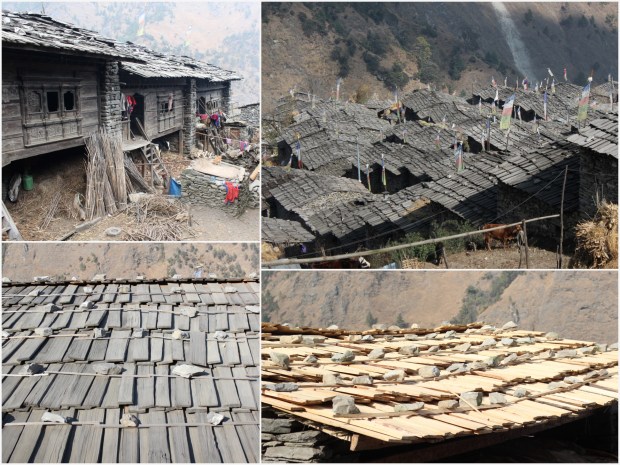
Gatlang is unique for its Tamang culture, as well as its architecture. The walls of the houses are all made of stone. The rooftops are created in the split shake style, with planks of wood held in place by rocks. Rows of houses are built connected to one another, like one may see with town houses. This is done for insulation purposes.
Lifestyle
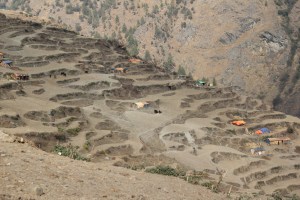
Terraced farm and livestock land at the edge of Gatlang
The daily activity of Gatlang villagers remains very traditional, and is based primarily around a life of yak and sheep herding, as well as subsistence farming. There are hundreds of farming plots terracing the landscape around the village, and a variety of different crops are grown, depending on the time of year. This includes food like potatoes, barley, corn, and millet.
Traditional gender roles remain the norm in Gatlang. Tamang women are responsible for daily housework, including minding the children, cooking meals, and ensuring the household has enough water from the local tap. Walking through the village, women can also be spotted skilfully weaving rugs, making yarn from yak hair, and sorting through crops like beans and corn.
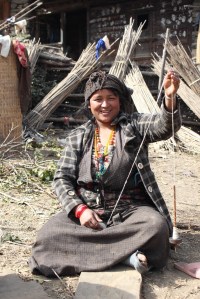
A Tamang woman making yarn in her front yard.
Tamang men may spend their days building local guest houses, fixing up homes, and working on local hydro-electric projects. With the creation of the Tamang Heritage Trail, an increasing number of men are moving to Kathmandu to pursue careers as porters or guides.
Children who are old enough are usually assigned daily chores. This often involves activities like walking into the jungle-areas to gather firewood, and collecting prickly nettles in order to make tea and soup.
Some children in Gatlang also attend the local government-run school, which accepts students up until grade eight. The school is at the top of the village, and has a number of classrooms, as well as a Chinese-sponsored computer room.
Flora and fauna
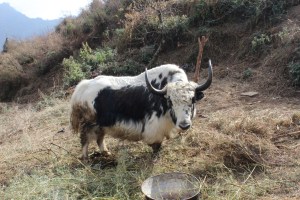
Domestic yak
A number of different types of animals are kept domestically in Gatlang, including yak, buff (water buffalo), cows, chickens, and goats. The Langtang region is also a place to spot langur monkeys and red pandas.
Tall pine, spruce, and fir trees surround the Gatlang hillside.
But perhaps the most famous plant in the Gatlang area is the rhododendron, Nepal’s national flower. During spring months, rhododendrons bloom in shades of red, white, and pink, creating a canopy over the area.
 Parpati Kunda Home Stay